Ask anyone who has moved to Barcelona what surprised them most and the answer is usually the same: the light. The city enjoys roughly 300 sunny days a year, winter afternoons hover around 10°C, and you can count the days you need a heavy coat on one hand. Summers pass 30°C, but the air is dry and a sea breeze moves through the streets, so it rarely feels like the humid heat of the U.S. East Coast or Tokyo.
This guide introduces the city through three lenses — climate, food and art — and then walks through the main neighborhoods in and around Barcelona. For readers coming from the United States, we add a few loose comparisons to American cities. They are meant to give you a feel for each area, not a precise match. Use them to shortlist, then walk the streets yourself before you decide.
Key takeaways
Start with two questions: do you want to be near the sea or the hills, and do you prefer the old town or the planned grid? The answers narrow the map quickly.
- Safety and convenience first: Eixample, Sarrià-Sant Gervasi, Les Corts
- Village feel, independent shops and a lively street life: Gràcia, Sant Antoni, Poble-sec
- Beach life: Poblenou, Vila Olímpica, Barceloneta
- Families choosing by school: Sarrià-Sant Gervasi, or Sant Cugat just outside the city
- Living in the tourist core of the old town is rarely a good long-term choice
Julian Lupyan / CC0 — Wikimedia Commons
Part 1: What makes Barcelona special
1. Climate: 300 days of sun
Barcelona has a Mediterranean climate. January averages around 9–10°C and August around 25–26°C. Rainfall is low and concentrated in autumn; many newcomers go a full year without buying an umbrella. The long daylight hours have a real effect on mood and energy, which is one reason northern Europeans move here in such numbers.
One caveat: many older buildings have weak heating and poor insulation, so apartments can feel colder inside than the weather suggests. When you view a flat in winter, ask about the heating system and check the windows.
2. Food: the Mediterranean diet at its source
Catalan cooking is built on olive oil, tomatoes, seafood, beans and vegetables, with wine in moderation. The everyday staple is pa amb tomàquet — bread rubbed with tomato, olive oil and salt. In late winter, families drive out of the city for calçots, a type of spring onion grilled over vine cuttings. Along the coast you will find fideuà (a noodle dish cooked like paella) and arròs negre (rice blackened with squid ink).
Market culture is strong. La Boqueria is famous but touristy; locals shop at Sant Antoni, Ninot or their neighborhood market. The Sunday vermut — an aperitif before a long lunch — is one of the gentlest rituals you will adopt. Asian grocery stores are plentiful, so rice, soy sauce, miso and tofu are never a problem, and the Japanese restaurant scene keeps growing.
3. Art and culture: Gaudí on your commute
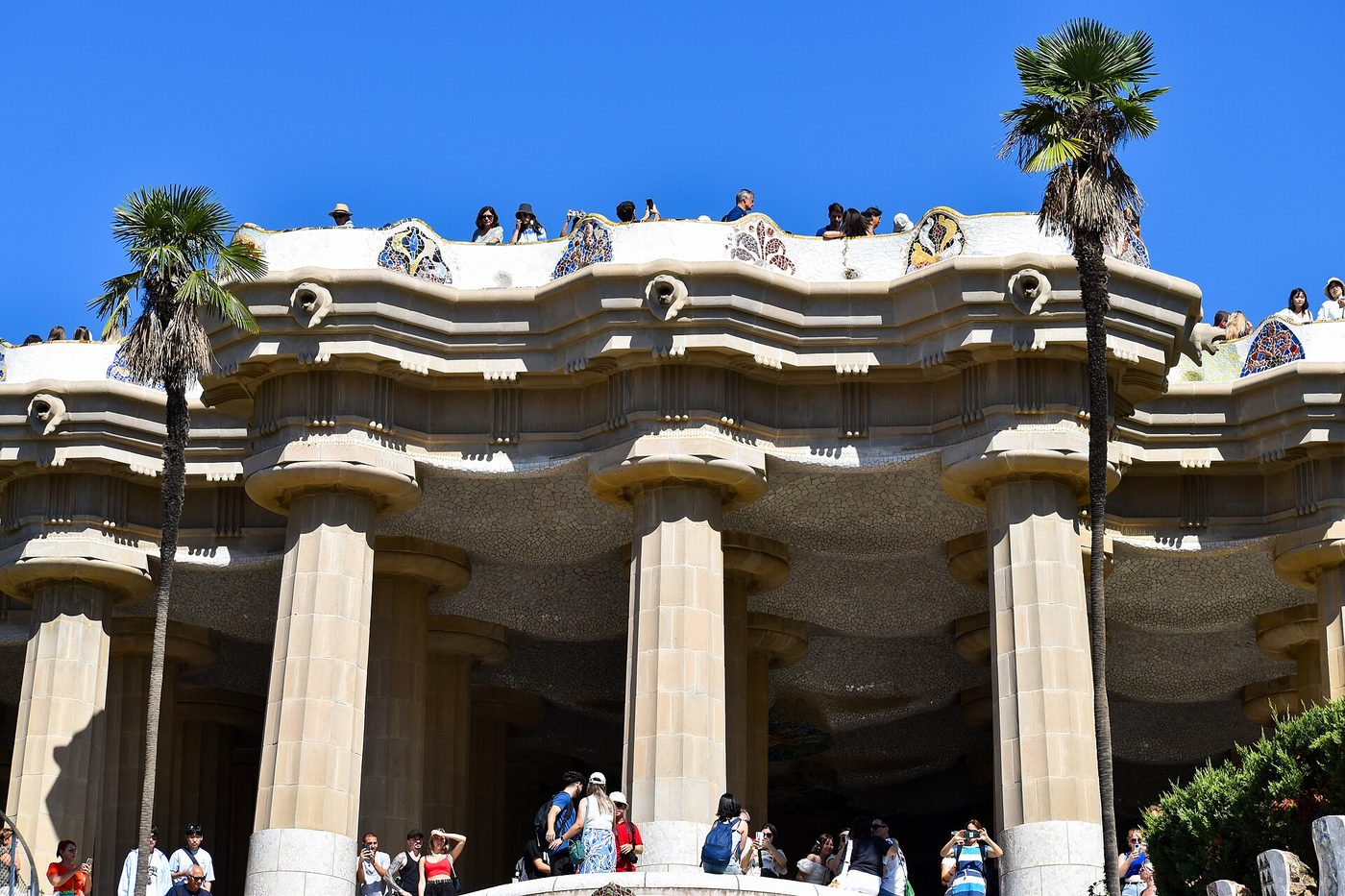
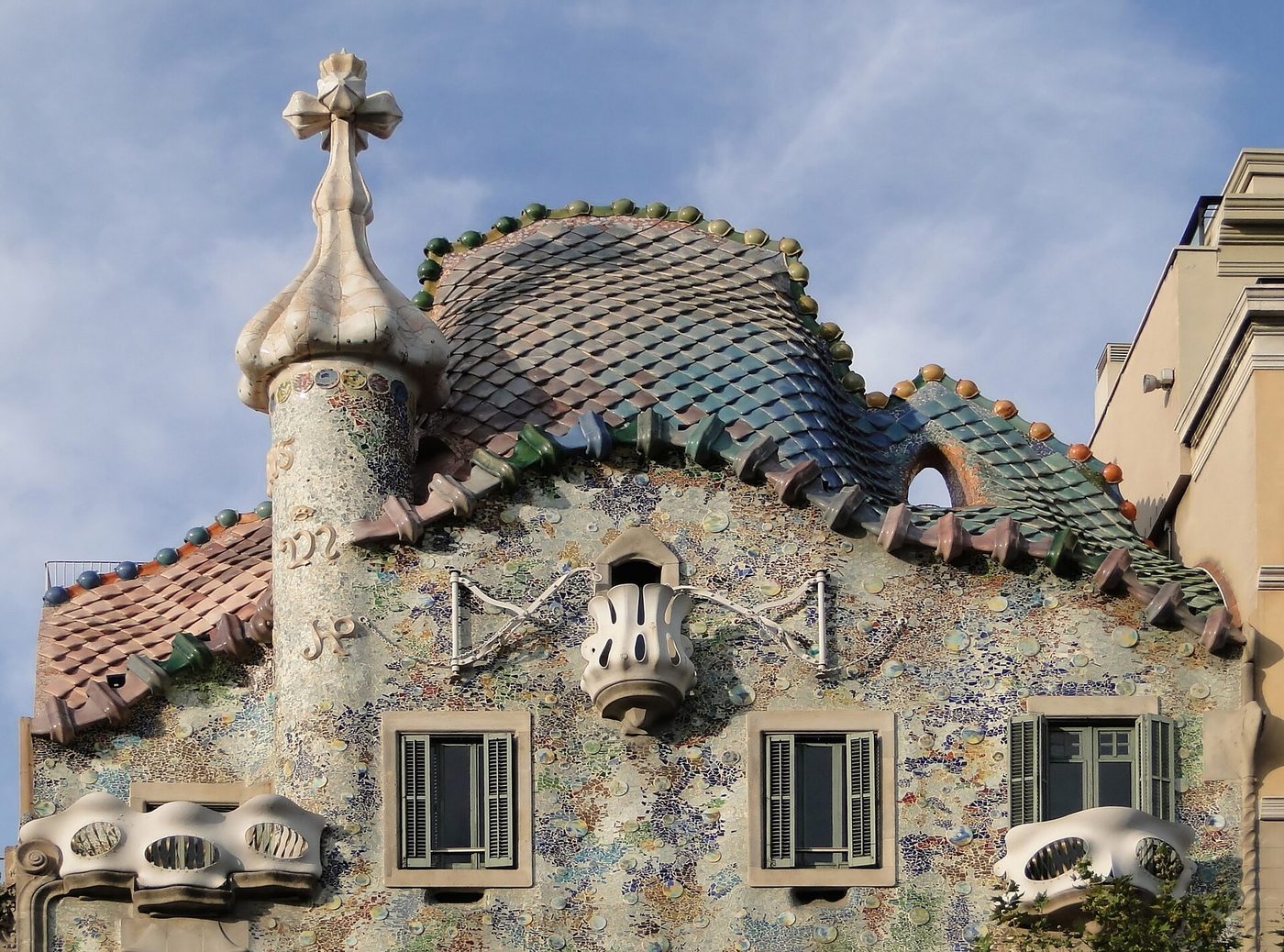
Antoni Gaudí's Sagrada Família, Park Güell, Casa Batlló and Casa Milà are tourist landmarks, but they are also part of daily life. Live near the Sagrada Família and the morning light on its spires becomes your routine. Beyond Gaudí, hundreds of Modernista buildings from the late 19th and early 20th centuries line the streets of the Eixample. The Picasso Museum, the Miró Foundation and the Palau de la Música add to a cultural calendar that never really stops. Football matters too: on FC Barcelona match days the whole city changes mood, and knowing the result is a reliable way to start a conversation with neighbors.
4. Language: Catalan and Spanish
Barcelona is the capital of Catalonia, which has two official languages, Catalan and Spanish. Public signage, administration and school instruction lean toward Catalan. Daily life works perfectly well in Spanish, and English is widely understood in the center. For families, the language of instruction in public schools is Catalan, which directly affects school choice; we return to this in Part 4.
Part 2: Neighborhoods inside the city
Eixample: the Upper East Side of Barcelona
The 19th-century grid with its chamfered street corners is the city's showcase of Modernista architecture. Passeig de Gràcia is lined with luxury brands and offices, and transport links are the best in the city. It is safe, walkable and complete — cafés, supermarkets, clinics and gyms are all within a few blocks. Rents are the highest in Barcelona: expect €1,500–2,200 a month for a one-bedroom. High ceilings and renovated period apartments go fast. The left side (Esquerra) is a little quieter and more residential than the right (Dreta).
Gràcia: Brooklyn's Williamsburg, before it got expensive
Once an independent town, Gràcia kept its narrow streets and small squares. Independent cafés, vintage shops and workshops dominate, and in August every street competes with handmade decorations during the Festa Major. It attracts younger residents and creative professionals, and rents are a step below the Eixample. The trade-off is older buildings — a fifth-floor walk-up is common — and streets that are closed to cars, which is lovely for children and difficult for parking.
Sarrià-Sant Gervasi: the quiet, leafy uptown
Spread across the hills on the northwest edge of the city, this is Barcelona's most established residential district. It is green, calm and the safest part of town, and most international schools are here or nearby, which is why international families gravitate to it. It sits farther from the center and the beach, and rents and purchase prices are the highest in the city. A car makes life easier.
Poblenou: the waterfront tech district
A former industrial zone rebuilt as the 22@ innovation district, Poblenou mixes new offices, apartments and coworking spaces, and it has become the natural home of remote workers and founders. Its great asset is the sea: walk down the Rambla del Poblenou and you are on the sand in minutes. Rents are climbing but still a little below the Eixample.
Sant Antoni and Poble-sec: the food streets
The renovated Sant Antoni market anchors the city's most dynamic food scene, with new restaurants and bars opening constantly. Neighboring Poble-sec, at the foot of Montjuïc, is a down-to-earth district known for the tapas bars of Carrer de Blai. Rents run 10–20% below the Eixample, the center is close, and competition for apartments has become intense.
The old town (Gòtic, Born, Raval): atmosphere versus reality
Medieval stone streets, wonderful for a weekend and difficult for a family. Born is stylish, Gòtic is overrun with tourists, and Raval is multicultural and rough around the edges. Apartments are old, dark and noisy, short-term tourist rentals crowd out long-term leases, and pickpocketing rates are the highest in the city. Unless you have a specific reason, look elsewhere for a long-term home.
Part 3: Options just outside the city
Sant Cugat del Vallès: the international-school suburb
Twenty-five to thirty minutes by train on the inland side of the Collserola hills, Sant Cugat is a town of about 90,000 with several international schools and the Japanese School of Barcelona. Houses with gardens are common, and it is very safe. You will depend on the train to reach the center, and the beach is far. It offers an easy English-speaking bubble — ideal for a fixed-term posting, but families who want deeper local ties sometimes choose the city instead.
Castelldefels and Sitges: the seaside suburbs
South of the airport, Castelldefels pairs a wide beach with a residential community favored by footballers and executives, and it also has international schools. Farther down the coast, Sitges is a beautiful town loved by artists and visitors, 35–40 minutes from Barcelona by train.
Badalona and Santa Coloma: the budget option
Adjacent to the city on the northeast and served by the metro, these towns offer clearly lower rents and proximity to the sea. The character varies a lot block by block, so walk the area before committing.
Part 4: Choosing a school first
For families, the rule is the same everywhere: shortlist schools before you shortlist apartments. Barcelona offers three paths.
- Public and semi-public (concertada) schools: almost free, with Catalan as the main language of instruction and Spanish taught as a subject. Places are assigned partly by address, and popular schools are hard to get into
- International schools: English or bilingual programs clustered in Sarrià-Sant Gervasi, Sant Cugat and Castelldefels. Fees range widely, roughly €8,000–25,000 a year
- The Japanese School in Sant Cugat for families following the Japanese curriculum
If you choose a local school, remember that Catalan is a third language for your child. Young children absorb it quickly; transferring in at ten or older is noticeably harder.
Bernard Gagnon / CC BY-SA 3.0 — Wikimedia Commons
Part 5: Getting around
Barcelona's public transport is excellent: twelve metro lines, dense bus coverage and commuter rail to the suburbs. Bikes and scooters are everyday transport, and the lane network keeps growing. A 30-minute journey counts as normal; 40 minutes from a suburb feels long to locals. The city center has a low-emission zone and expensive parking, so plan on no car in the city and a car if you live in the suburbs.
Part 6: Checklist before you choose an area
- Decide whether the sea or the hills matters more to you
- Shortlist three schools and confirm the commute for each
- Walk candidate areas on a weekday evening and a weekend
- Check elevators, heating and windows during viewings
- Think about summer heat (shade, airflow) and winter cold at the same time
- Work backward from your rent ceiling to the income proof you will need
- Be honest about the old town: noise and petty crime wear you down
- Confirm there is a market, supermarket, family doctor and park nearby
Part 7: The rhythm of the year
Spring brings Sant Jordi on 23 April, when the city fills with books and roses; the bonfires and fireworks of Sant Joan on the night of 23 June open the summer; in July and August many residents leave on holiday; and September's La Mercè festival fills the old town with castells (human towers) and giant puppets. October and November carry most of the year's rain. From Christmas to the Three Kings on 6 January, shopping streets and markets glow.
Daily life runs two to three hours later than in the United States. Lunch is around 2 pm, dinner after 9 pm, and on summer nights children are still playing in the squares at 10. Remote workers tied to U.S. hours need to design their day around this. Grocery shopping is cheaper at markets than supermarkets, most shops close on Sunday, and produce and wine cost noticeably less than in American cities while eating out costs about the same. A family of four spends roughly €2,000–2,500 a month excluding rent; international school fees change the picture entirely.
Part 8: The surprises, good and bad
Most newcomers say people were kinder than expected: reserved at first, then genuinely helpful once you are a neighbor, especially if you have children. Healthcare is strong, and once you are enrolled in the public system a family doctor costs almost nothing; many families add private insurance for English-speaking clinics.
On the hard side, Spanish bureaucracy is slow and inconsistent — appointments are scarce, answers vary by clerk, and one missing document means another visit. Petty theft is common in tourist areas and on the metro, although violent crime is rare. And housing, as this guide keeps repeating, is the single biggest obstacle: choosing a neighborhood is only the first step, and actually securing an apartment there decides whether the move works.
Summary
Barcelona delivers climate, food and art as part of ordinary life: a sunny walk past Gaudí to the market, lunch by the sea, children playing in a square at dusk. The price of that popularity is a brutal rental market and a constant overlap between tourism and daily living. Hold both pictures at once — the neighborhood you fall for and the one where you can realistically live — and you will choose well.
Talk to us about moving to Spain
From the digital nomad visa application to housing and company formation in the Canary Islands, our Barcelona-based team handles the whole process. The first 30-minute consultation is free.
Book a Free Consultation